

The art show of works by Indian masters of modern art in the city is not to be missed
 |
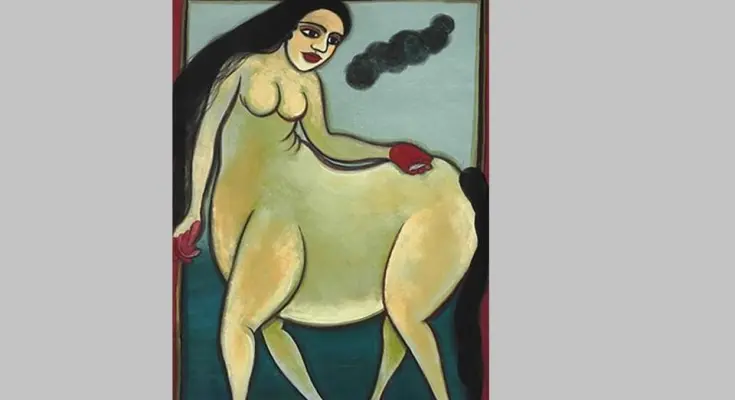
| ‘Kamdhenu’ by Gogi Saroj Pal on display at the Punjab Kala Bhawan, Sector 16, in Chandigarh.(HT Photo) |
Describing the wave of abstract art in the US way back in the sixties, American cartoonist Al Capp quipped with this pronouncement: ‘A product of the untalented sold by the unprincipled to the utterly bewildered’. Similar dismissal is given to modern art in general till date in the Indian sub-continent with everyday viewers staring hard at a painting and then asking ‘Par yeh banaya kya hai?’ (What is it all about?) or ‘Changaji, ehnu kehande ne modern art!’ (So this is called modern art!)
This brings to my mind a story of two Pakistani painters, Iqbal Rashid and Ahmad Zoay. Both are no more but in the 1980s they were cult figures and in 1986 they decided to cross the Indo-Pak border at Ferozepur sans passports or visas as they were convinced that as artists of the sub-continent they had the artistic right to see Khajurao or Agra. They told this story to the Colonel and he realized that they were harmless decided to test their artistic talent. When he saw Zoay’s abstract works he dismissed it as no art but admiring the realistic work of Rashid pronounced him an artist. He commanded Zoay to improve his art! The two were kept in Ambala Jail till papers were readied to escort them back to the border they had strayed in from.
Before I get into telling more tales, let’s get to the heart of the matter of the remarkable exhibition ‘India Modern: Narratives from 20th Century Indian Art’, which showcases works of 41 artists, at the Punjab Kala Bhawan, who dared to cross the borders from tradition to modernity and excel in their art and become names to reckon with. The reason why this show is evincing so much of interest is that it is a look-back at a very significant period in our country’s art history and also demystifies it for students, connoisseurs, writers and even practitioners and teachers of art. It is not easy to make the transition from tradition to modernity in any field and so also in art.
Most noteworthy facets of these pioneers and their work is that although influenced by the West, with western art education coming to Indian schools in colonial times, it took the West a very long time to accept it. They were comfortable with Indian miniatures and iconic sculptures but ignoring the painters and sculptors who reached great heights in their works in the fusion of the west with the east. Interestingly, the only Indian painter who figured in a western compilation of the great Indian painters of the 20th Century was Rabindranath Tagore, whose work is also showcased here in the Indian Moderns.
It was heartening that Indian collectors and galleries recognized many others while the west shied away. For long reputed auctioneers like Christie’s and Sotheby’s were content to promote the traditional but the game-changer came when Indians living abroad started investing in the artists of their soil be it Tyeb Mehta, Jamini Roy, MF Husain, Ram Kumar, Vasudeo Gaitonde and many others.
Also, what is it that makes the works of the Indian moderns different from their counterparts? The answer is simple but significant the artists of the east never cut themselves off from their roots to just practice a Western fad. It was impossible to cut off the umbilical cord and reckless too with a rich centuries-old tradition of iconography and a versatile tradition of folk art. Neither did they dismiss their milieu, their people, and their emotions. So what happened was that they told their story in their own language or metaphor if you choose to call it so and thus was born a new genre called India Modern that calls out for fresh narratives.
Nirupama Dutt
Hindustan Times
http://www.hindustantimes.com/punjab/round-about-india-modern-art-of-the-matter/story-KzK128DUIqIo8JdSUsTsxJ.html
